
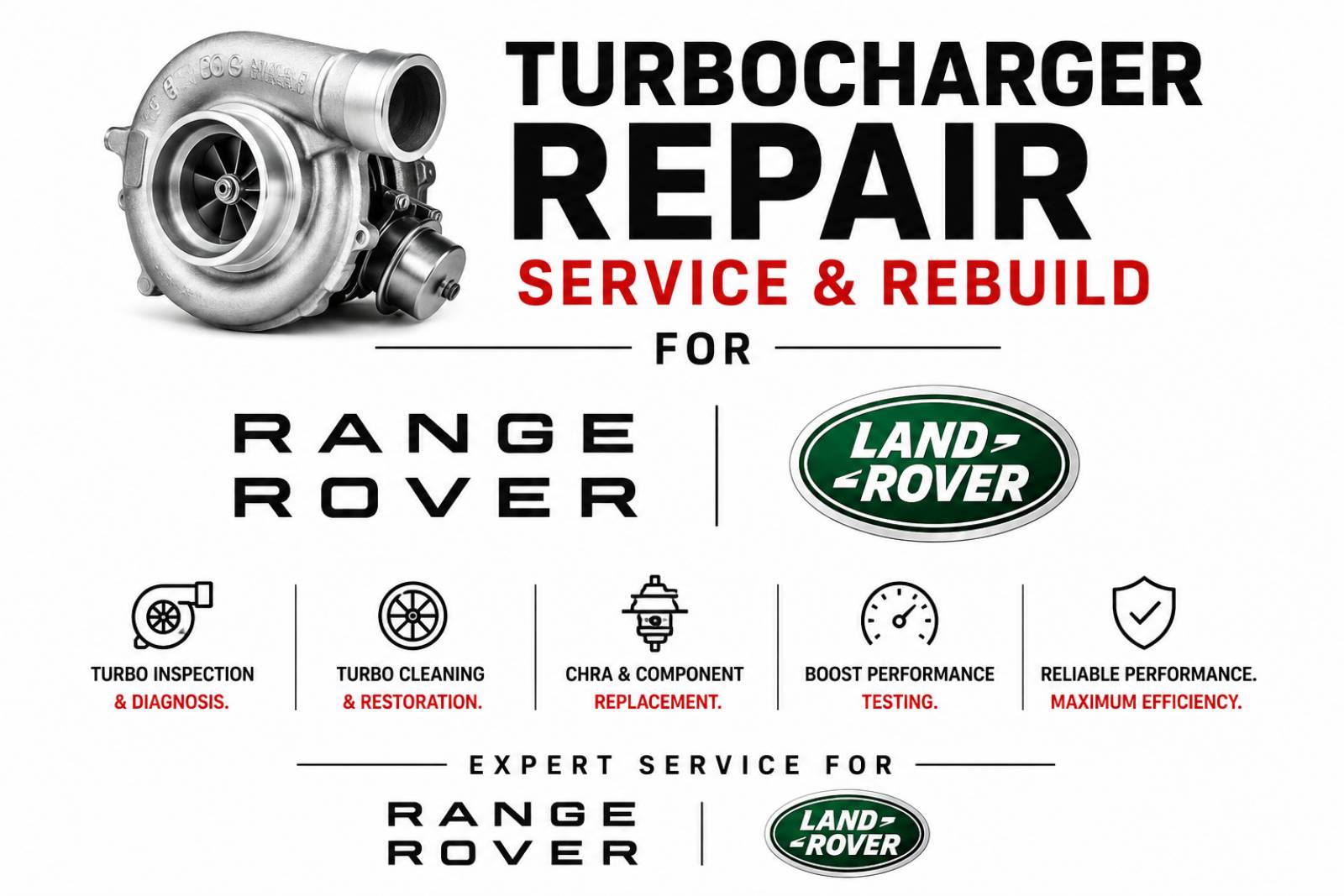
Turbochargers spin at over 150,000 rpm and rely entirely on clean, cool oil. Extended oil intervals and short journeys coke the bearings, and a failed turbo can send oil through the intercooler and into the engine. Catching the early signs saves a great deal of money.
We check boost pressure against target, inspect shaft play with a borescope, test the electronic actuator and check oil feed and return lines before condemning a unit. Where replacement is needed we fit genuine or Garrett remanufactured turbochargers and always renew the oil feed pipe, gaskets and engine oil at the same time.
What the service includes
- Boost pressure and actuator diagnostic tests
- Turbo shaft play and borescope inspection
- Turbocharger replacement with new oil lines
- Electronic actuator repair or replacement
- Intercooler cleaning after turbo failure
- Post-fit oil change and road test
Signs you need it
- Whistling or siren noise under acceleration
- Loss of power and 'restricted performance'
- Blue smoke from the exhaust
- Excessive oil consumption
- Boost pressure fault codes
How we work
Every job begins with a proper diagnosis on the lift and on Land Rover's diagnostic platform. You receive a written report, photos and a fixed price on WhatsApp before any work begins. Genuine or OE-equivalent parts are used, every repair carries a written warranty, and the vehicle is road tested before handover.
Frequently asked questions
Can a Range Rover turbo be repaired?
Sometimes the actuator or a boost pipe is the fault rather than the turbo itself. If the core is worn we recommend a remanufactured or new unit rather than a cheap rebuild kit.
Why must the oil lines be replaced?
Old oil feed lines carry carbon deposits that can starve the new turbo of oil. Replacing them is a warranty condition for us.
How long does a turbo replacement take?
Usually one to two days, depending on access on your particular engine.