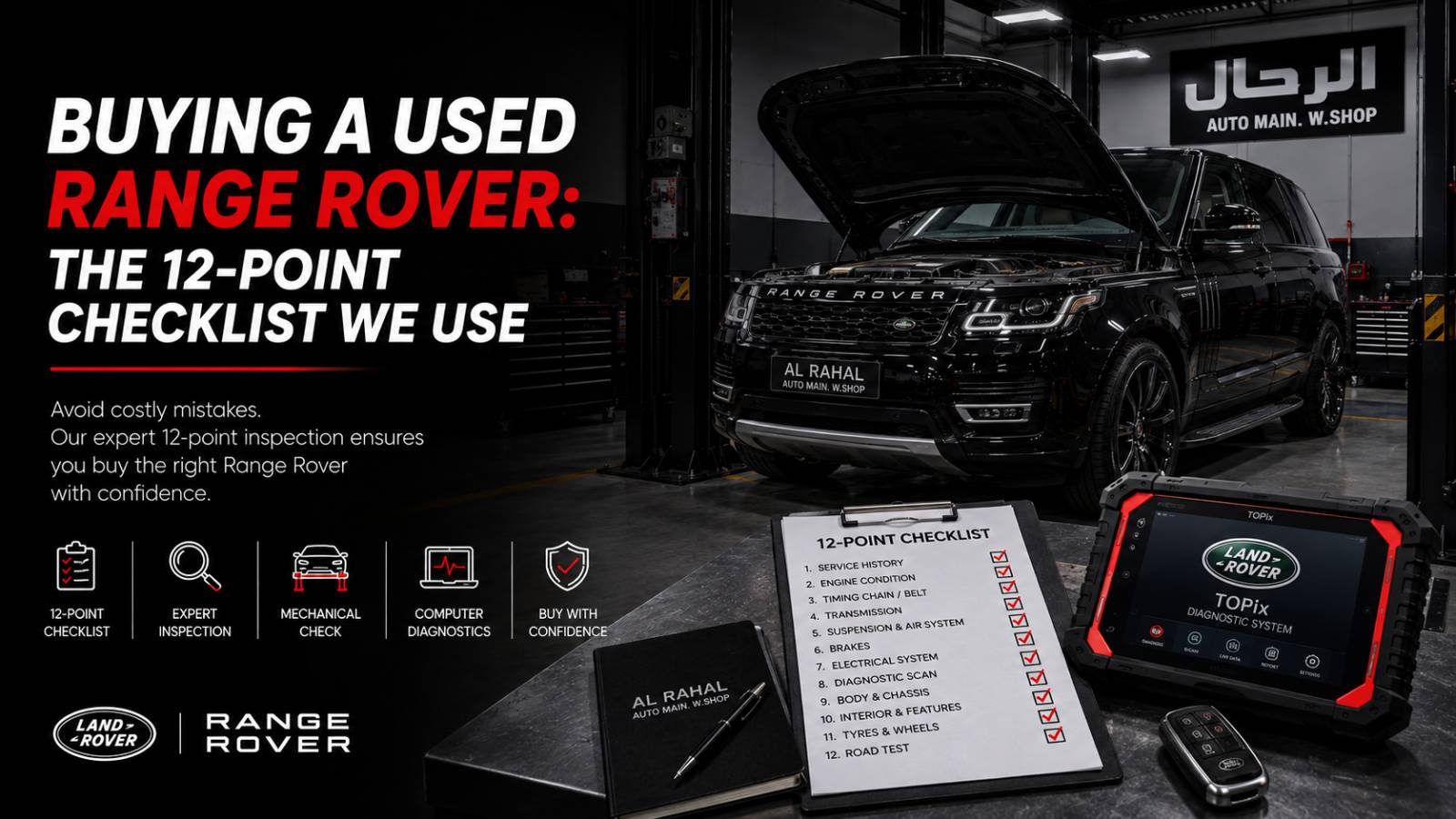
A used Range Rover can be one of the best value luxury purchases available, or one of the most expensive mistakes. The difference is almost always in the history and the condition of a handful of known components. Here is the checklist we work through.
Before you visit
- Ask for the full service history and check the intervals. Gaps over 20,000 km are a red flag.
- Ask who serviced it. Dealer or specialist history is worth paying for.
- Check the registration for accident records and outstanding finance.
At the car, engine off
- Look at the ride height on all four corners. A low corner means an air spring leak.
- Check the oil. Milky residue under the filler cap or coolant in the expansion tank suggests head problems.
- Inspect the tyres for uneven inner-edge wear, which points to alignment or suspension bush issues.
Cold start
- Listen for a timing chain rattle in the first three seconds.
- Watch for smoke. Blue is oil, white that persists is coolant.
- Check every warning light extinguishes.
On the road
- Feel for gearbox harshness, particularly on downshifts to a stop.
- Listen for driveline whine that changes with speed.
- Test every electrical function: windows, seats, tailgate, cameras, climate.
Then get it on a lift
None of this replaces a professional inspection with a diagnostic scan. Stored fault history tells a story the seller may not, and two hours on our ramp can reveal underbody damage, leaks and previous repairs. Our pre-purchase inspection includes a written report you can use to negotiate.