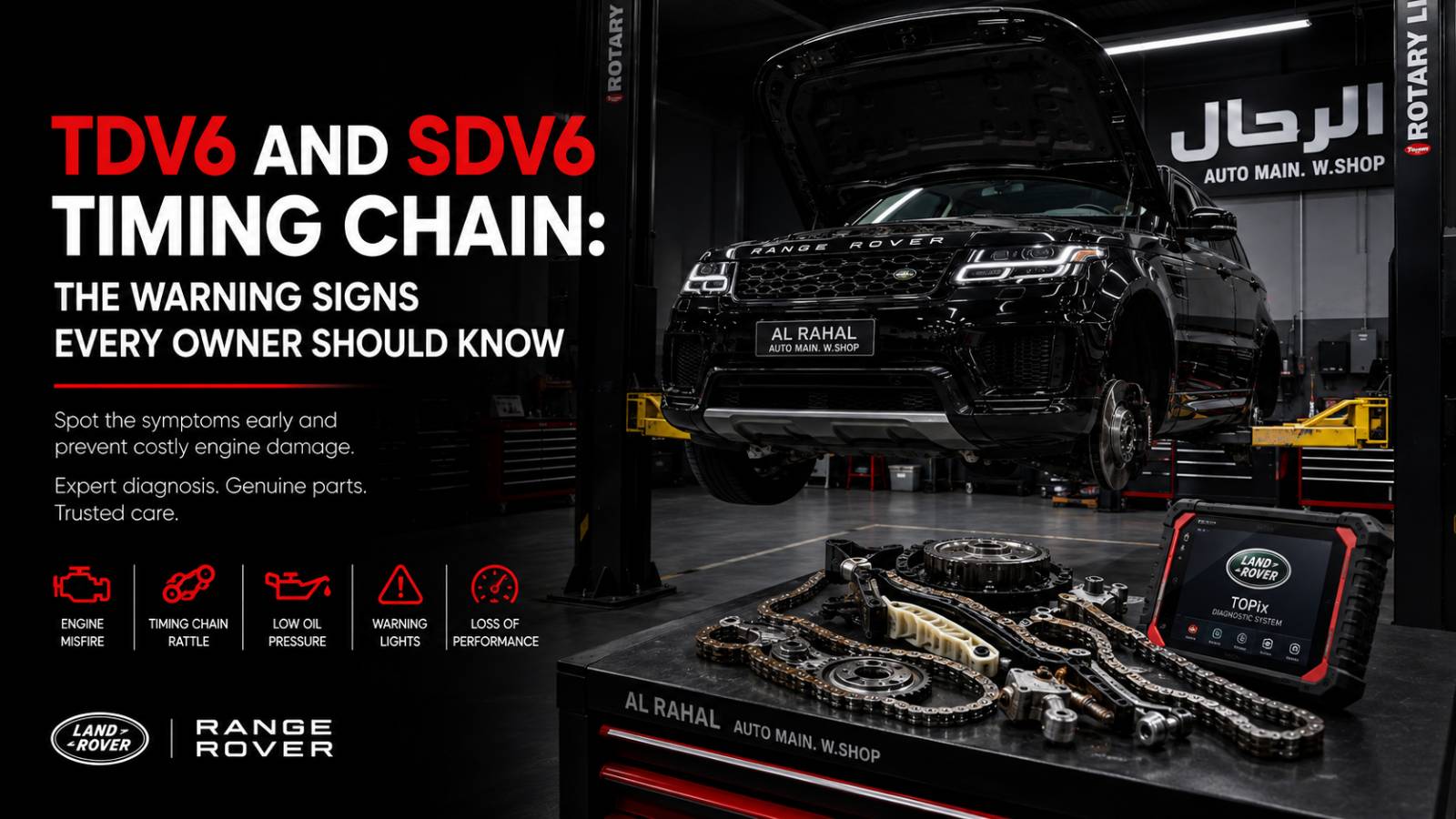
The 3.0-litre V6 diesel powered the Discovery 4, Range Rover Sport and full-size Range Rover for more than a decade. It is smooth, torquey and, with the right care, capable of very high mileages. It also has one weakness that every owner should understand: the timing chain.
How the wear develops
The chain itself rarely snaps. What happens is gradual elongation as the pins and bushes wear, combined with softening of the hydraulic tensioner. As the chain lengthens, the tensioner extends further to take up slack until it reaches its limit. At that point the chain is loose at every cold start until oil pressure builds, and the rattle you hear is the chain slapping against its guides.
The sound to listen for
Start the engine after it has stood overnight and listen from the front, driver's side. A metallic rattle lasting one to three seconds that then disappears is the classic symptom. As wear progresses the noise lasts longer and can appear on hot restarts. In the final stage the engine may set camshaft correlation fault codes and run roughly at idle.
Why oil quality is the whole story
Chain wear on this engine correlates almost perfectly with oil change discipline. Extended intervals, incorrect specification oil and short journeys that never let the oil reach temperature all accelerate wear. Our recommendation for the Gulf is an oil and filter change every 8,000 km with the correct low-SAPS oil, regardless of what the service indicator says.
When to act
If you hear the rattle, book a diagnostic check. We can measure chain stretch from live camshaft timing data without dismantling anything. If stretch is confirmed, replacing the chain, guides and tensioners costs a fraction of an engine and returns the car to silent running. Leaving it risks the chain jumping timing, which bends valves and usually means a rebuild.