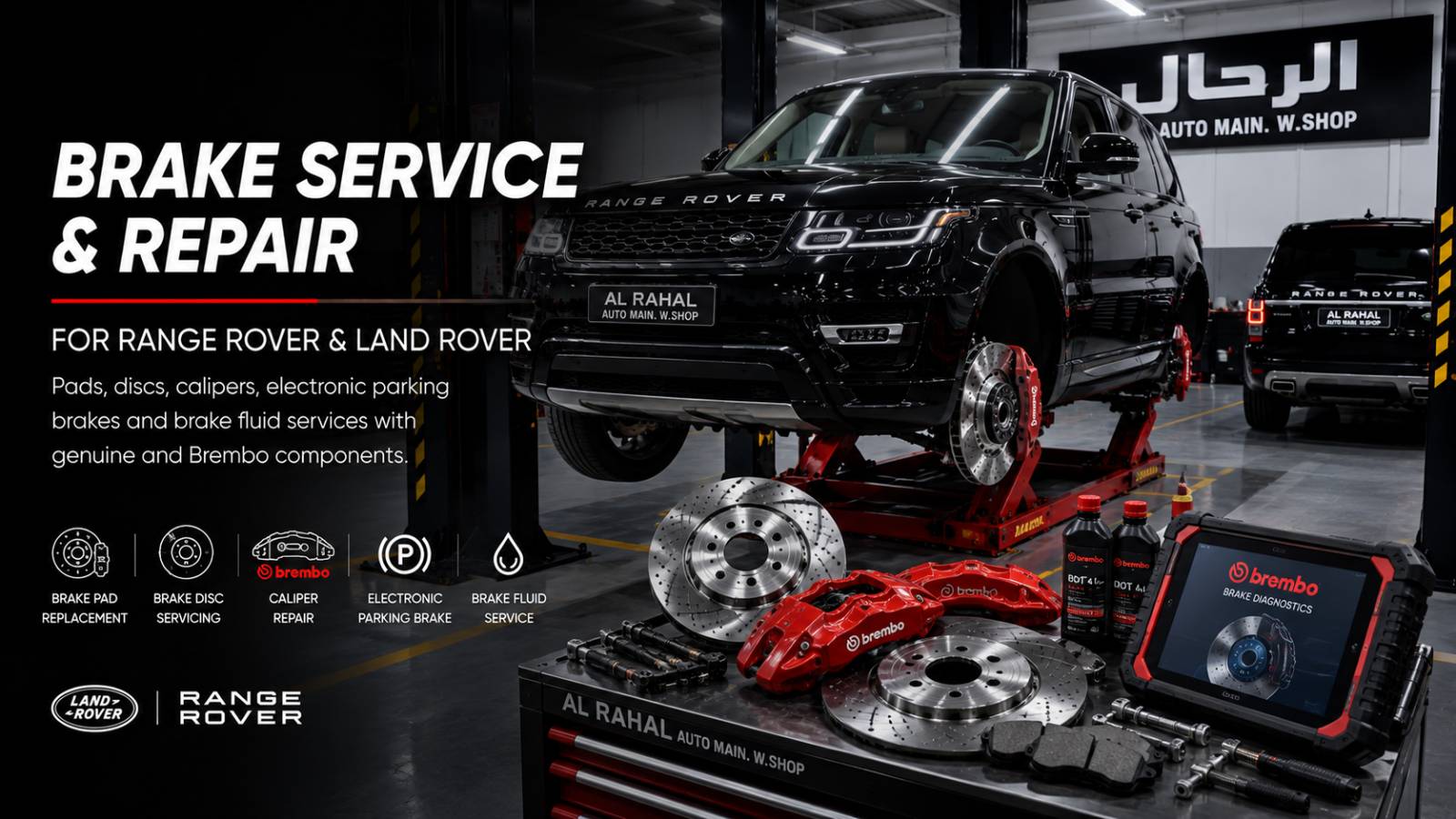
Brake judder is one of the most common complaints on the Range Rover Sport, and the standard answer, new discs and pads, does not always cure it. Here is what actually causes it and how we diagnose the right fix.
Cause one: disc thickness variation
Discs rarely 'warp'. What happens is uneven wear that creates thickness variation around the disc, so the pads grip more in some places than others. Heavy braking followed by holding the pedal at a standstill, common in traffic, imprints pad material onto hot discs and starts the cycle.
Cause two: hub run-out
If the hub face or a wheel bearing is worn, a perfect new disc will run out of true and wear unevenly within weeks. We measure hub run-out with a dial gauge before fitting new discs. Skipping this is why some owners replace discs every year.
Cause three: suspension bushes
Worn front lower arm bushes allow the wheel to shimmy under braking load, felt as judder even with perfect discs. It is more common on the Sport than the full-size Range Rover because of the stiffer setup.
The right repair
Measure, then replace. Quality discs from Brembo or genuine Land Rover, matching pads, bedded in correctly, on hubs that have been checked. It costs slightly more than a quick swap and lasts several times longer.