
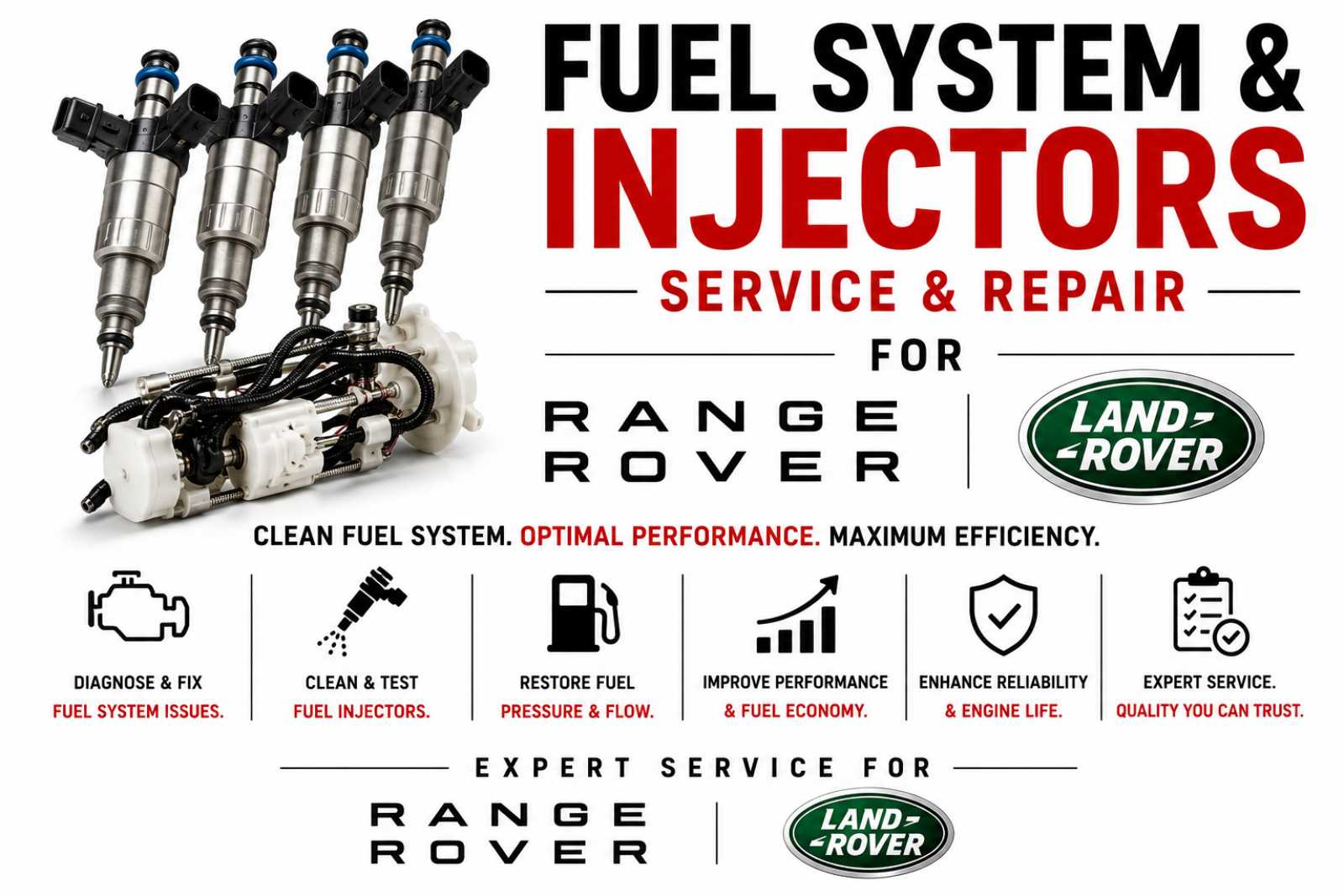
Range Rover fuel systems operate at very high pressures and rely on clean fuel. Contaminated diesel, missed filter changes and long idling all shorten injector life, and a single failing injector can wash a cylinder bore with fuel. Direct-injection petrol engines have their own high-pressure pump and carbon build-up issues.
We test injectors for leak-back and spray pattern, replace high-pressure pumps and fuel rails, fit genuine fuel filters, and clean intake carbon on direct-injection engines with walnut blasting. Fuel tanks, in-tank pumps and level sensors are also repaired here.
Fuel System & Injectors on the Range Rover Evoque
The Evoque is the most popular Range Rover in the region, and its compact size hides genuinely complex mechanicals. From the Haldex all-wheel-drive unit to the nine-speed automatic on later cars, we service every version.
Engines we cover on this model: 2.0 Si4 petrol, 2.2 SD4 diesel, 2.0 Ingenium petrol and diesel, P300e PHEV. Production 2011 – present (L538, L551). Faults we see most often on the Range Rover Evoque include haldex all-wheel-drive pump and filter, nine-speed zf gearbox shift quality, turbocharger and boost pipe faults, and each is diagnosed with the model-specific procedure before any parts are recommended.
What the service includes
- Injector leak-back and balance testing
- Injector replacement and coding
- High-pressure fuel pump replacement
- Fuel filter and water separator service
- In-tank fuel pump and sender replacement
- Intake walnut blasting for carbon build-up
Signs you need it
- Misfire or rough running
- Difficult starting, especially when hot
- Loss of power or fuel pressure fault code
- Excessive fuel consumption
- Diesel knock or smoke
How we work
Every job begins with a proper diagnosis on the lift and on Land Rover's diagnostic platform. You receive a written report, photos and a fixed price on WhatsApp before any work begins. Genuine or OE-equivalent parts are used, every repair carries a written warranty, and the vehicle is road tested before handover.
Frequently asked questions
How often should the diesel fuel filter be changed?
Every 32,000 km, or annually. It is the cheapest protection for your injectors.
Do injectors need to be coded?
Yes. Each injector has a correction code that must be programmed to the engine control module.
What is walnut blasting?
A method of cleaning carbon from the intake valves of direct-injection engines using crushed walnut shell. It restores lost power and smooth running.